
Employee Payroll Management and Deductions: 5 Essential Benefits

Employee Payroll Management and Deductions: 5 Essential Benefits
Employee Payroll Management and Deductions is one of the most important HR responsibilities in any modern organization. Companies operating in Saudi Arabia and the GCC rely heavily on accurate payroll processes to ensure compliance with labor laws, maintain employee satisfaction, and avoid financial risks.
With the rise of digital transformation, businesses now depend on automated ERP systems—such as Key Smart ERP—to manage payroll, deductions, allowances, overtime, and end-of-service calculations with precision and transparency.
This guide explains why payroll management matters, how deductions are applied, and the key advantages organizations gain from adopting a smart payroll system.
🟦 1. What Is Employee Payroll Management and Deductions?
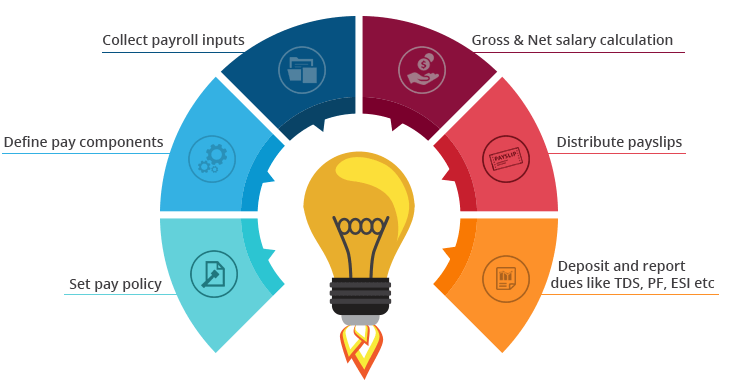
Employee Payroll Management and Deductions covers the full operational cycle of calculating employees’ salaries, applying mandatory and optional deductions, adding allowances, managing overtime, and issuing payslips.
It also includes preparing:
- WPS (Wage Protection System) files
- GOSI contributions
- Salary transfer reports
- Final settlement calculations
A well-structured payroll system ensures every employee is paid accurately and fairly each month.
🟦 2. Types of Payroll Deductions (Mandatory & Optional)
Payroll deductions fall into three major categories:
✔ Mandatory Deductions
Required by law or company policy:
- Unpaid leaves
- Absence days
- Late arrivals
- Early departures
- Penalties and violations
✔ Optional Deductions
Requested or approved by the employee:
- Loan installments
- Salary advances
- Insurance upgrades
- Employee purchases
✔ Government Deductions
Depending on country requirements:
- GOSI contributions
- Taxes (if applicable outside KSA)
Automating these deductions prevents errors and ensures full compliance.

🟦 3. How Employee Payroll Management and Deductions Work in Key Smart ERP
Key Smart ERP provides a complete payroll engine that automates:
✔ Salary calculation
Based on:
- Attendance logs
- Working hours
- Shift schedules
- Leaves & holidays
✔ Overtime calculation
Following Saudi Labor Law (1.5x – 2x rate).
✔ Allowance management
Including:
- Housing
- Transportation
- Risk allowance
- Bonuses
- Mobile allowance
✔ Deductions
The system applies:
- Absence deductions
- Late penalties
- Loan repayments
- Unpaid leave deductions
All calculations are automatic and reflect the company’s HR policies.

🟦 4. Compliance With Saudi Labor Law & WPS
Employee Payroll Management and Deductions must comply with local regulations.
Key Smart ERP ensures:
✔ WPS (Wage Protection System) compliance
Automatically generates:
- Bank salary files
- WPS CSV formats
- Payslips in Arabic & English
✔ GOSI calculations
Accurate employer and employee shares.
✔ End-of-service benefits
Based on employee tenure and contract type.
Compliance reduces legal risks and keeps employee records fully aligned with requirements.
🟦 5. Benefits of Automating Employee Payroll Management and Deductions
⭐ 1. Accuracy & Zero Human Error
Automation eliminates manual mistakes that often occur in spreadsheets.
⭐ 2. Faster Payroll Processing
What used to take days can now be completed in minutes.
⭐ 3. Full Transparency for Employees
Every deduction and allowance is clearly shown in the payslip.
⭐ 4. Integrated Attendance & Payroll
Biometric attendance flows directly into payroll calculations.
⭐ 5. Strong Reporting & Insights
Key Smart ERP provides:
- Payroll summaries
- Deduction reports
- Overtime cost analytics
- Department-wise salary distribution
These insights support better budgeting and decision-making.

🟦 Additional Insights: The Strategic Role of Employee Payroll Management and Deductions
While payroll has traditionally been considered a financial function, modern organizations now treat Employee Payroll Management and Deductions as a strategic HR pillar. Accurate payroll enhances employee trust, reduces turnover, and strengthens the company’s reputation. When staff understand exactly how their compensation is calculated, they feel valued and respected—leading to higher job satisfaction and better performance across departments.
🟦 Impact of Automation on HR Efficiency and Employee Experience
Automation in Employee Payroll Management and Deductions streamlines HR workflows by eliminating repetitive manual tasks. HR teams can shift their focus from operational stress—such as handling complaints or correcting salary errors—to more strategic initiatives like talent management and employee development. This shift enables HR departments to deliver a better employee experience, reduce operational costs, and support organizational growth with minimal effort.
Recommended Resources
🔗 Employee Management & Payroll: 7 Powerful Insights
🔗Top 7 Reasons Your Business Needs an ERP System in 2025 (Powerful & Essential Guide)
🟦 Enhancing Financial Accuracy Through Real-Time Data Integration
One of the biggest advantages of digital payroll systems is real-time data integration. When Employee Payroll Management and Deductions is fully connected with attendance systems, project costing, and accounting modules, every record becomes accurate and instantly traceable. Real-time synchronization ensures that salary expenses are always correct, budget allocations are precise, and financial forecasting becomes more reliable. This level of accuracy empowers management to make confident decisions supported by complete and up-to-date information.


